

By Ankh -ḥm.t-nṯr n Ḥwt-Ḥr m Šḫmt | Sibylla Minervalis
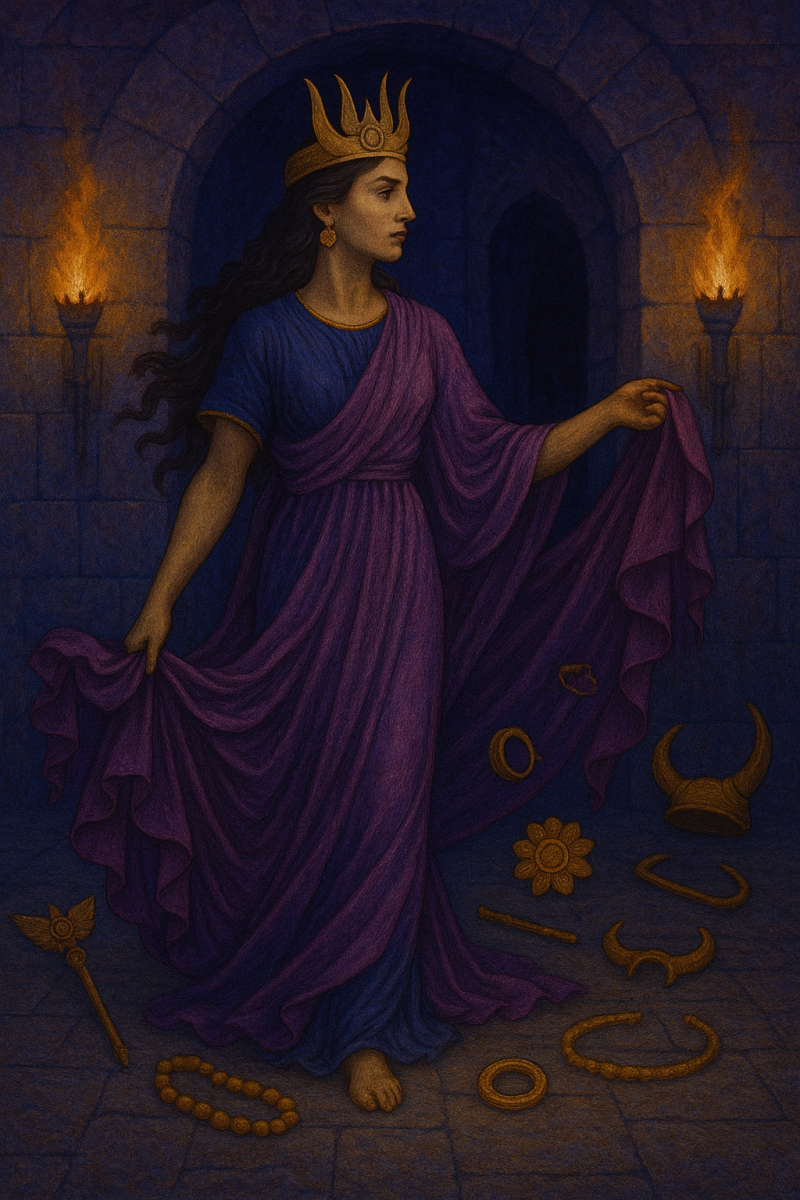
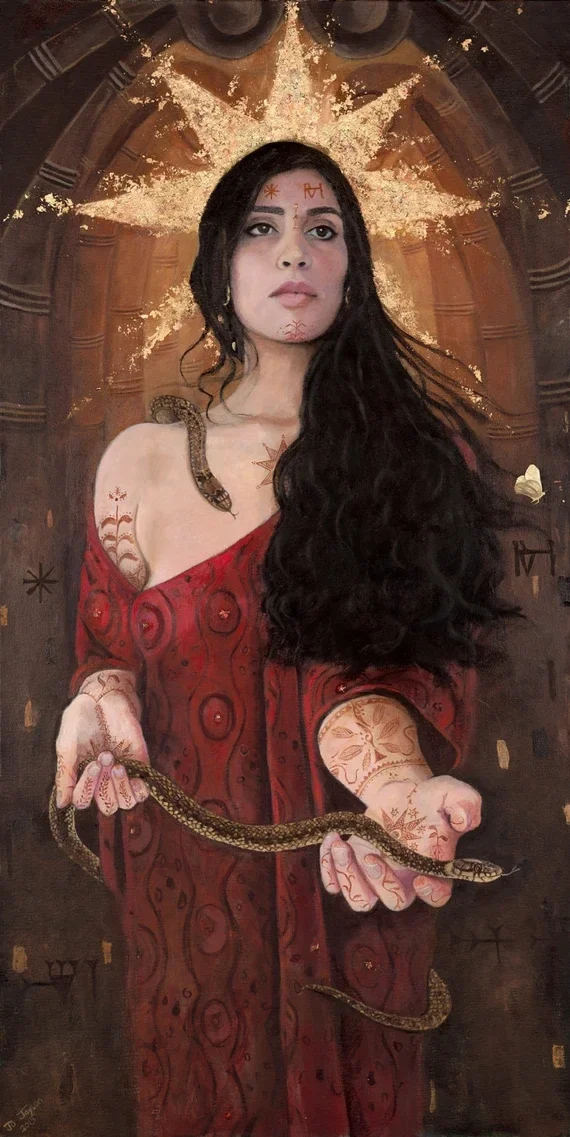
There are descents that are chosen,
even when the cost is already known.
Not reckless descents.
Not naïve ones.
But the kind where the soul pauses at the threshold,
counts the gates,
and steps forward anyway.
In myth, this is not bravery.
It is recognition.
You descend because something has already claimed you.
The underworld is not entered by accident.
It strips you not to punish,
but to see what will remain when nothing extraneous is allowed to pass.
Each gate removes a certainty, a protection, a future you thought you needed.
What survives the underworld belongs to the gods.
Not because it is rewarded,
but because it cannot be undone.
Some things do not break when stripped.
They do not dissolve when hope is removed.
They do not vanish when the world above continues without them.
They endure.
And endurance changes the nature of wanting.
Wanting that survives the underworld is no longer desire as it once was.
It is no longer hunger.
It is no longer fantasy.
It becomes claim.
What you fought for is not lost.
It is held.
Not held by you.
Held by law.
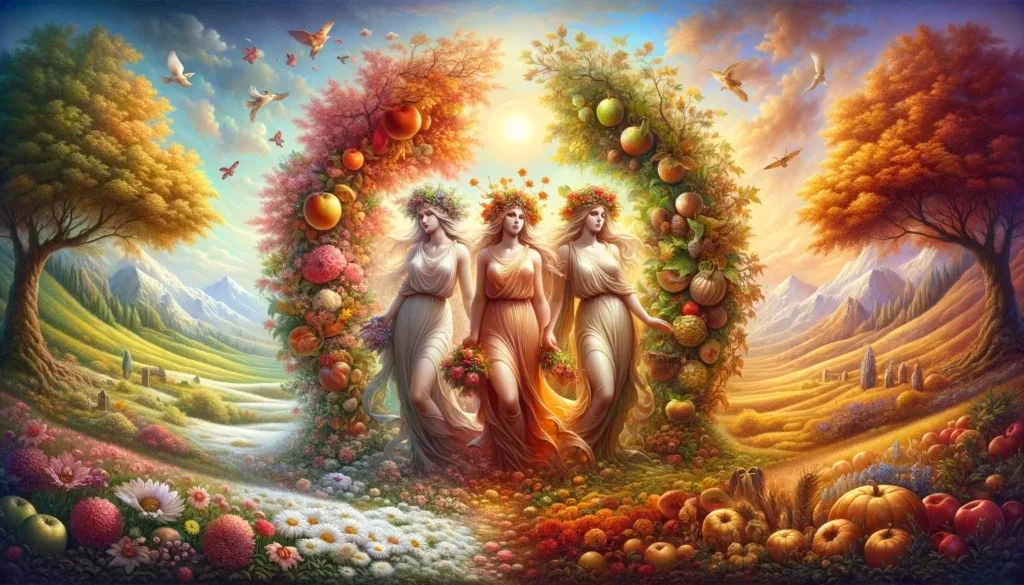
Timing takes over then.
Not the timing of plans or intentions,
but the timing of seasons.
The keepers of time do not answer questions.
They do not negotiate.
They do not explain delays.
They open and close gates when the turning is complete.
They teach that destiny is not for knowing,
only for walking.
There are bonds that do not belong to linear time.
They breathe instead;
appearing, withdrawing, returning altered.
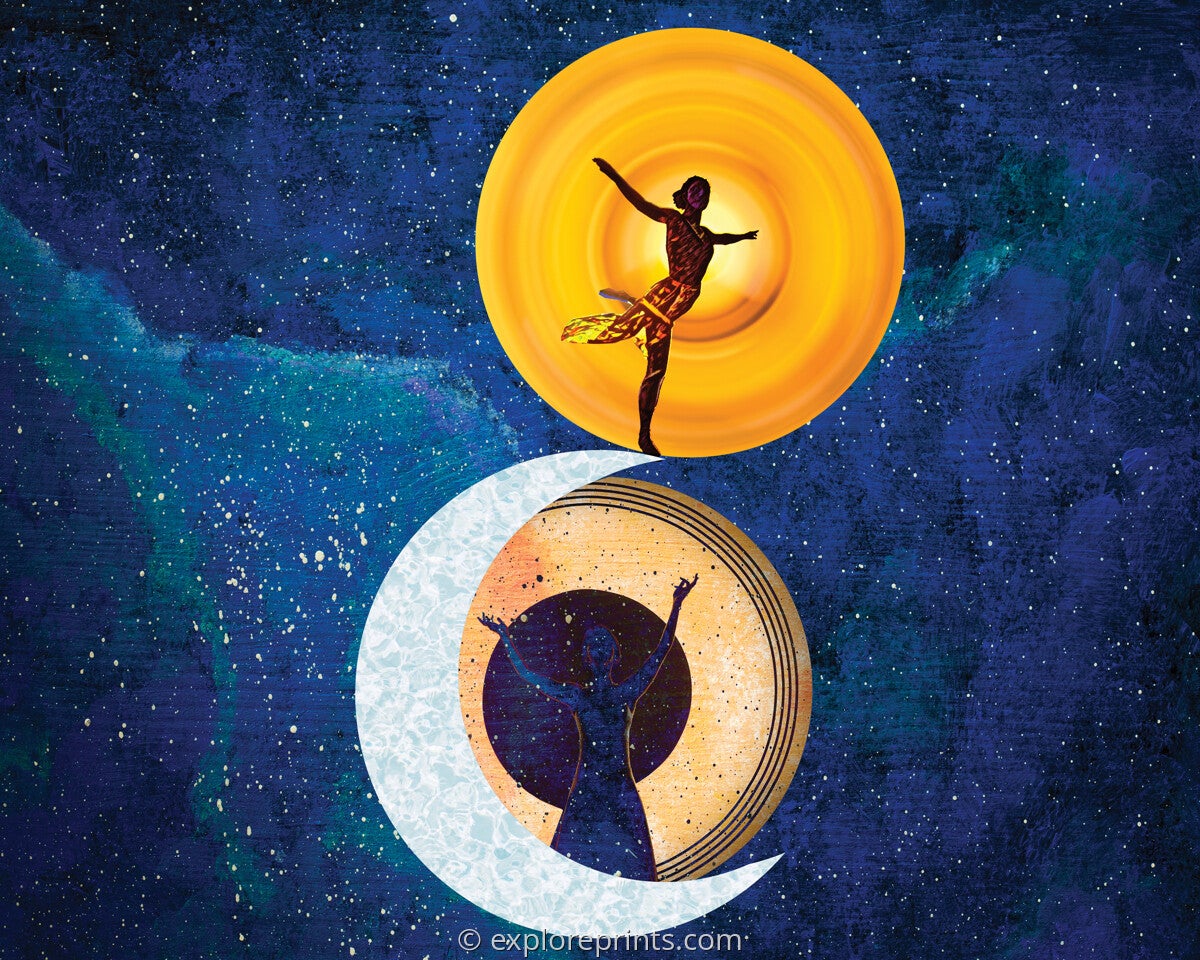
Light and dark understand this.
They are mirrors, not enemies.
One does not conquer the other.
They exchange places at the threshold,
each carrying the memory of the other without needing to remain.
Some connections live this way;
not as permanence,
but as rhythm.
And in every myth of descent, there are two roles.
The one who goes down,
and the one who remains above.
Not because one loves more,
but because one can survive the night.
The one who descends is not stronger in the way the world understands strength.
They are simply built for liminal ground.
They can move through silence without losing themselves.
They can endure the stripping and return still wanting.
The one who stays above ground is not a villain.
They are not faithless.
They are uninitiated.
The descent would unmake them.
This asymmetry is not a flaw.
It is the cost of transformation.

The one who descends always wonders if they were felt.
If the earth moved.
If the loss registered.
And the one who remained above feels echoes;
disturbance without initiation,
memory without passage.
That is the imbalance myth requires.
Because if descents were equal,
nothing would change.
Some wants are fulfilled.
Some are transmuted.
Some are carried forever as living fire.
In myth, the ones that endure become something else entirely.
They become guardians.
Keys.
Offerings.
Sources of power.
Thresholds others will one day cross.
They are not always satisfied.
But they are never wasted.
To descend knowing the cost
and to return still wanting
is not failure.
It is initiation.
And initiation does not promise reunion.
It promises inheritance.
What survives the underworld does not ask permission to remain.
It waits,
until it is returned to the world
in a form that no longer requires sacrifice.
That is not loss.
That is law.
ABout Ankh
Ankh, the Sibyl of This Age, bridges the ancient and the modern, translating the language of the gods into wisdom for the human journey.
Her work weaves together spiritual philosophy, oracular insight, and symbolic science to guide seekers toward remembrance of their divine nature.
Through her writings and teachings, the voice of the Sibyl lives again, not as a relic of the past, but as a living oracle for the world reborn.
Add comment
Comments